


How Long Does It Take to Charge a BMW EV? Real Times for Every Model
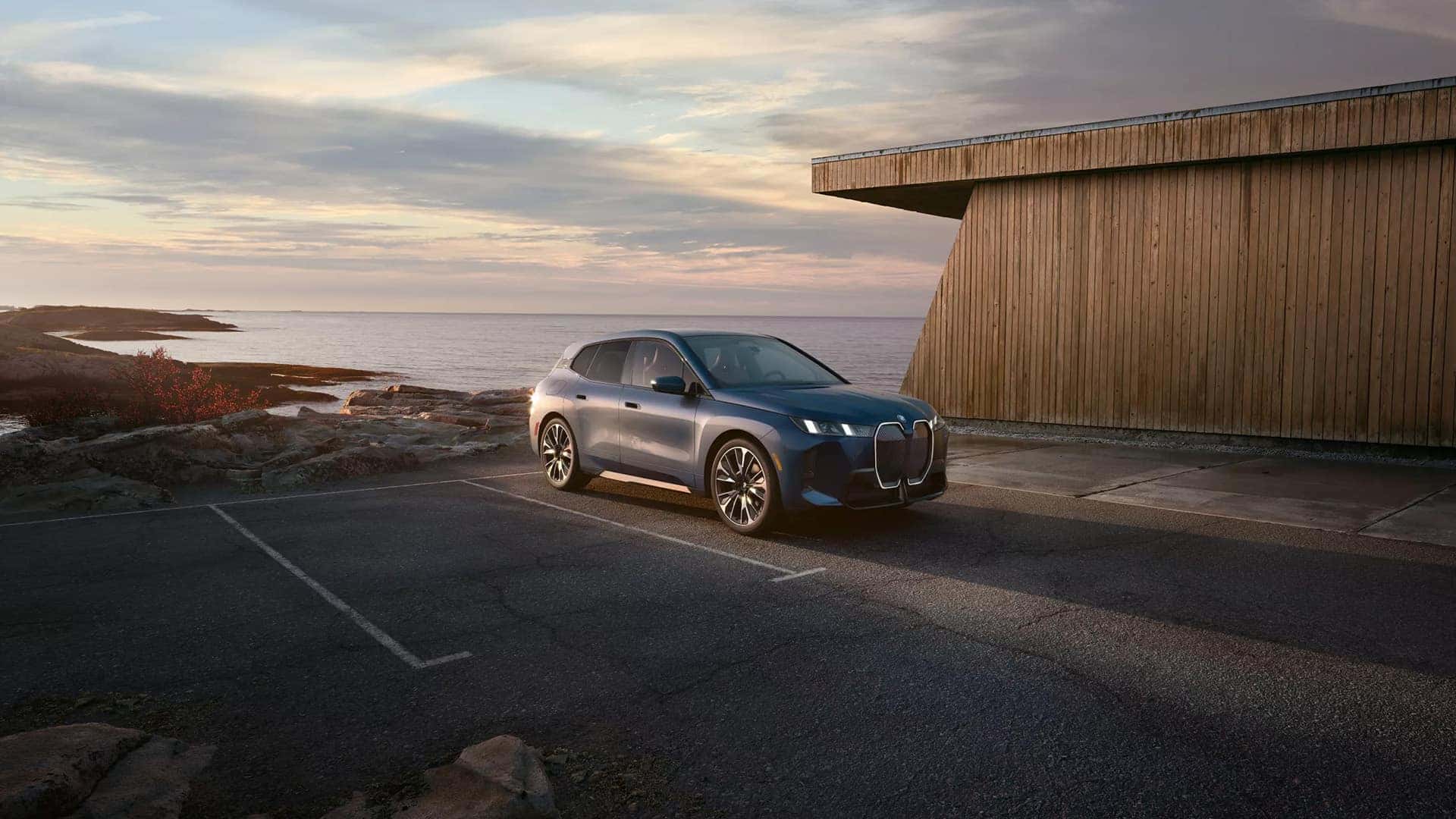
Whether you are researching your first electric BMW or deciding between a fully electric model and a plug-in hybrid, charging time is one of the first practical questions to get right.
The answer isn’t one number: it depends on which BMW you are driving and where you are plugging in. For Manchester and West St. Louis area drivers, this guide covers real charging times across BMW’s fully electric lineup including the i4, iX, and all-new iX3, and for the plug-in hybrid models, the X5 xDrive50e and XM Label.
Understanding the Three Charging Levels
All BMW electrified vehicles share the same basic charging vocabulary. Knowing what each level delivers makes the model-specific numbers easier to understand.
Level 1 uses a standard 120-volt household outlet and delivers around 3 to 5 miles of range per hour. It is too slow to function as a daily driver for a fully electric BMW, but it works well for topping off a PHEV battery overnight, particularly when the electric range is under 45 miles.
Level 2 runs on a 240-volt circuit and delivers up to 11 kilowatts in most BMW configurations. This is the level that covers nearly every real-world charging need, at home through a BMW Flexible Fast Charger or at any compatible public AC station. Level 2 is where most BMW EV and PHEV owners start and end their day.
DC Fast Charging uses high-voltage direct current and applies only to fully electric BMW models. Public DC fast chargers in BMW’s lineup range from 175 kW on the iX to as high as 400 kW on the new iX3’s 800-volt Neue Klasse architecture. PHEVs do not support DC fast charging.
Fully Electric Models: Level 2 Home Charging
Most BMW EV owners do the vast majority of their charging at home overnight on Level 2. Here is what to expect from each fully electric model at 11 kW.
The BMW i4 eDrive40 charges from empty to full in approximately 8 to 10 hours, making a standard overnight charge more than sufficient to wake up with a complete battery for any Manchester-area commute.
The BMW iX xDrive45 reaches a full charge in approximately 9 hours and 45 minutes at 11 kW. The larger-battery iX xDrive60 and M70 extend that window to approximately 11 hours and 15 minutes. Both figures come from BMW’s own published charging specifications and assume an 11 kW Level 2 supply.
The all-new BMW iX3 changes the Level 2 story more than any other model in the lineup. Built on BMW’s Neue Klasse platform with support for up to 22 kW of AC charging, the iX3 can complete a full charge in approximately 5 to 6 hours at a compatible high-power public Level 2 charger, cutting that window roughly in half compared with the rest of the BMW EV lineup. On a standard 11 kW home charger, expect a time similar to the iX, approximately 10 to 11 hours. The 22 kW capability is most useful at public Level 2 stations that provide the higher power supply.
BMW recommends having a Level 2 charging circuit professionally installed at home for any fully electric model. BMW of West St. Louis has a dedicated guide to home EV charger installation for drivers working through that process.
Fully Electric Models: DC Fast Charging
For road trips along Missouri highways or a quick top-up between stops, DC fast charging is where BMW’s fully electric models perform most impressively.
The BMW i4 accepts up to 200 kW of DC fast charging and goes from 10 to 80 percent in approximately 31 minutes. BMW states the i4 can add up to 90 miles of estimated range in approximately 10 minutes on a high-power DC fast charger under optimal conditions.
The BMW iX accepts up to 175 to 195 kW depending on trim and goes from 10 to 80 percent in approximately 34 to 35 minutes. That is long enough to grab a coffee at a rest stop along I-70 and return to the car with the bulk of your range restored.
The all-new BMW iX3 sets the brand’s charging performance ceiling. Its 800-volt architecture accepts up to 400 kW of DC fast charging, more than double the rate of the iX, and is designed to deliver faster 10-to-80 percent sessions than anything else in the BMW lineup. Real-world session times for US-delivered vehicles are still being validated as the iX3 reaches owners. Confirmed times will be published by BMW once initial delivery data is available.
One tip that applies to all three models: the BMW iDrive navigation system can precondition the battery automatically when you set a DC fast charger as your destination. Preconditioning brings the battery to its optimal temperature range before arrival and meaningfully improves the charging rate and total session time.
Explore BMW’s fully electric lineup and see what is in stock at BMW of West St. Louis.
PHEV Models: Charging the X5 xDrive50e and XM Label
The X5 xDrive50e and XM Label are plug-in hybrids, which means they charge exclusively on Level 1 and Level 2 AC power. No DC fast charging option exists on either model, and none is needed: PHEV batteries are considerably smaller than those in fully electric vehicles, so Level 2 charging is measured in a few hours rather than overnight.
The BMW X5 xDrive50e carries a 25.7 kWh battery supporting up to 40 miles of EPA-rated electric range. At 11 kW Level 2, it charges from empty to full in approximately 2.5 to 3 hours. The 2026 model year updated the X5 xDrive50e from the previous 7.4 kW AC rate to 11 kW, making home charging approximately 25 percent faster than on earlier model years. For most Manchester-area drivers using the X5 as a daily PHEV, a partial top-up in the evening is enough to start every morning with a full electric battery.
The BMW XM Label carries a PHEV architecture delivering 30 miles of EPA-rated electric range and charges to full on a Level 2 circuit in approximately 3 hours. Level 1 charging on a standard outlet works as a backup, though the slower power delivery makes a Level 2 circuit the practical choice for any driver relying on the XM’s electric range daily.
For both PHEV models, the routine is straightforward: plug in at home after work, wake up with a full electric battery, and run most local errands around West St. Louis without the engine starting at all.
What Charging Looks Like Day to Day in Manchester
The numbers above describe the ceiling. Daily driving rarely touches it.
Most BMW EV and PHEV owners never charge from empty to full because they top up every night rather than waiting for the battery to run down. Plugging in at home after work and unplugging in the morning covers the overwhelming majority of St. Louis metro daily driving without a single stop at a public charger.
DC fast charging is built for road trips and longer drives, not for Chesterfield-to-downtown commutes. When it is needed, the I-270 corridor and I-64 have growing public DC fast charging infrastructure. BMW electric vehicle owners also receive preferred access to the IONNA charging network through the My BMW App.
For a complete overview of BMW’s charging benefits, network access, and home charging options, visit the BMW EV Charging and Benefits page at BMW of West St. Louis.
Have questions about home charging setup or which BMW EV fits your commute? Our team at BMW of West St. Louis in Manchester is ready to help.
More from BMW of West St Louis
Meet the All-New BMW i3 Sedan: The Electric 3 Series Has Arrived
The BMW 3 Series has gone fully electric, and the all-new BMW i3 Sedan is the most exciting sports sedan to hit the road in years. It pairs the driving feel BMW is known for with up to 468 miles of estimated range, 463 horsepower and a cabin that feels like a step into the…
Best BMW SUV for Families: X1, X3, X5, or X7?
BMW builds four X-series SUVs that make a legitimate case for family use, and the right one for your household depends almost entirely on how many seats you need, how much cargo flexibility matters daily, and whether you will actually use features like third-row seating or towing capacity. This guide walks through the family case…
New BMW X7 for Sale in St. Louis, MO
Looking for BMW’s flagship three-row SUV? The BMW X7 is available now at BMW of West St. Louis, your authorized BMW dealership in Manchester. Whether you’re heading to Ballwin, Ladue, or anywhere across the St. Louis metro, the X7 delivers flagship-level luxury and the confidence of standard xDrive all-wheel drive. Why Choose the BMW X7?…
0 comment(s) so far on How Long Does It Take to Charge a BMW EV? Real Times for Every Model